MFA Degree Show, Hatton Gallery, Newcastle upon Tyne
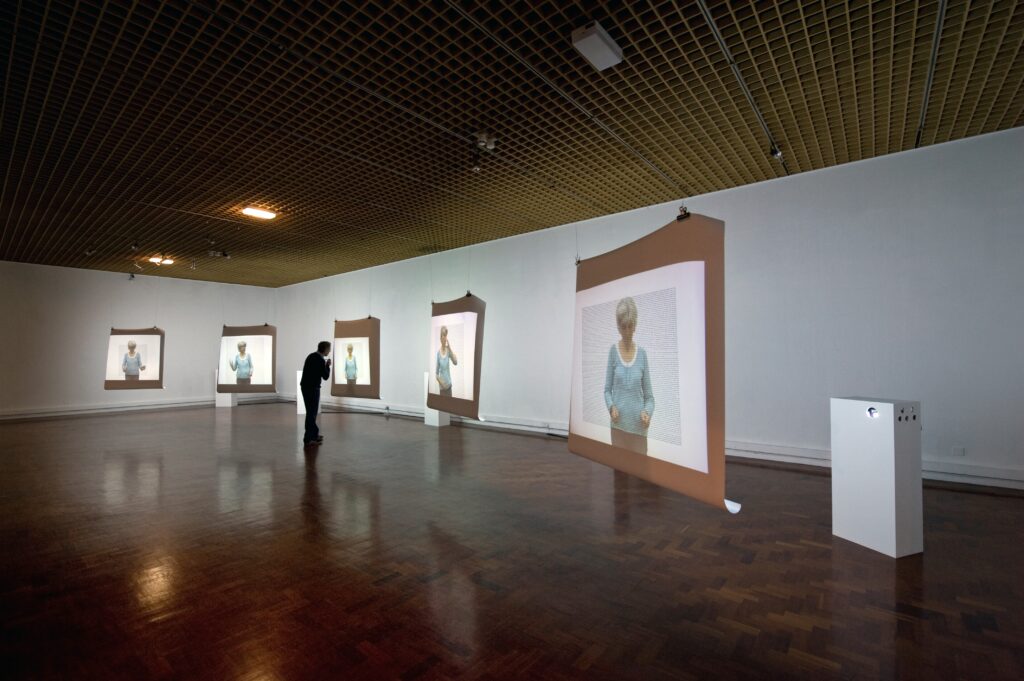
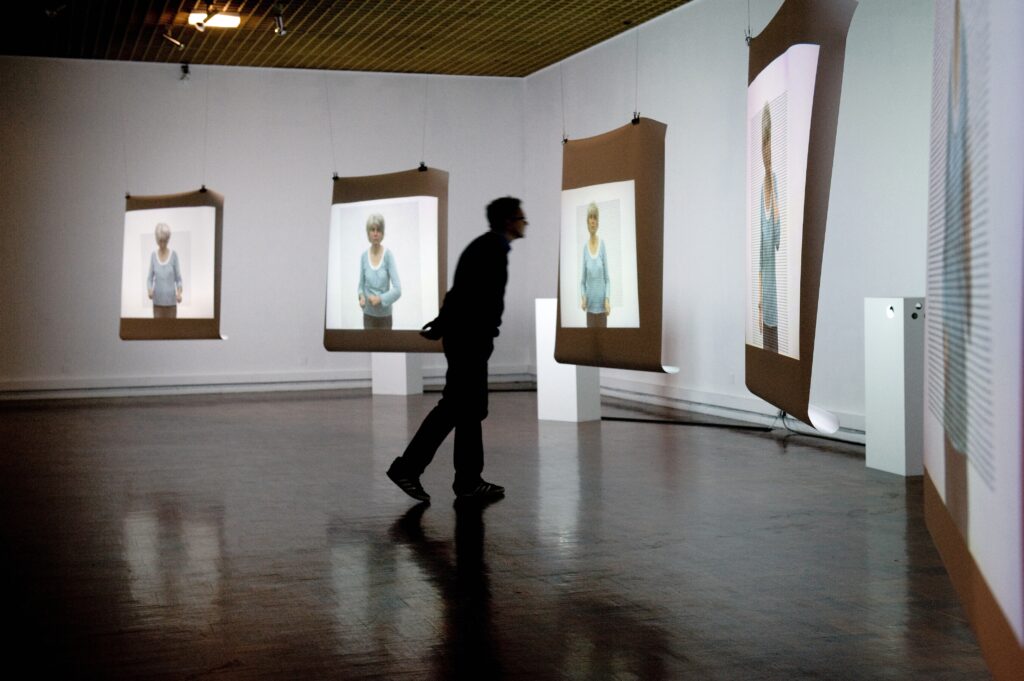
A 5-channel installation projection. Five silent films of the re-enacted hand gestures and head movements of prominent public figures when they were giving a speech: Barack Obama, Lady Gaga, politician Roy Hattersley, reporter Kate Aidie and artist Mark Leckey.
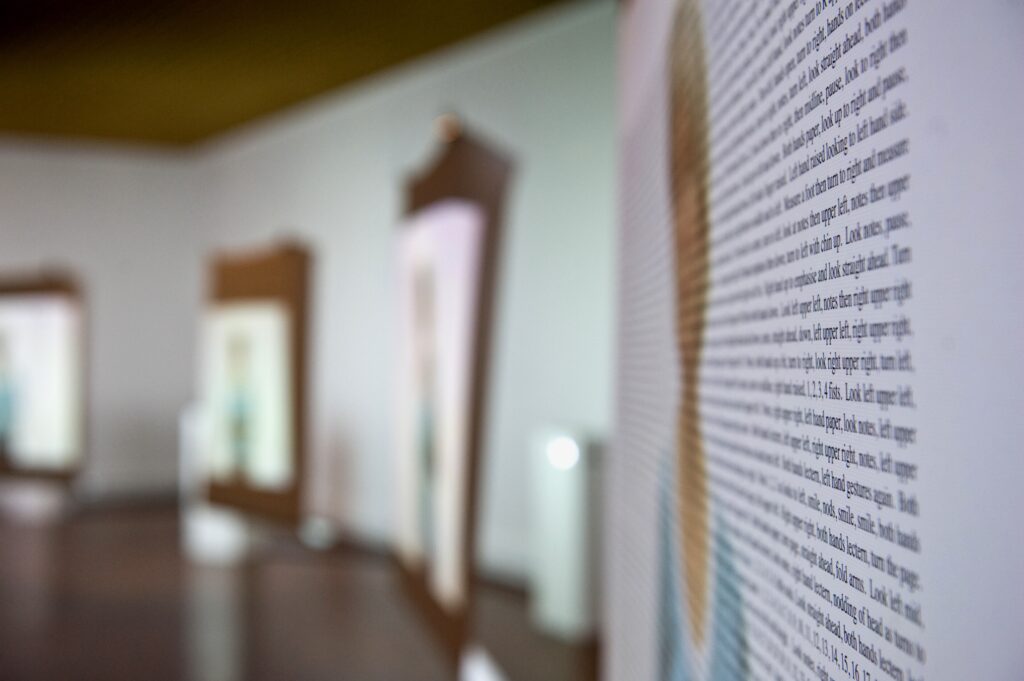
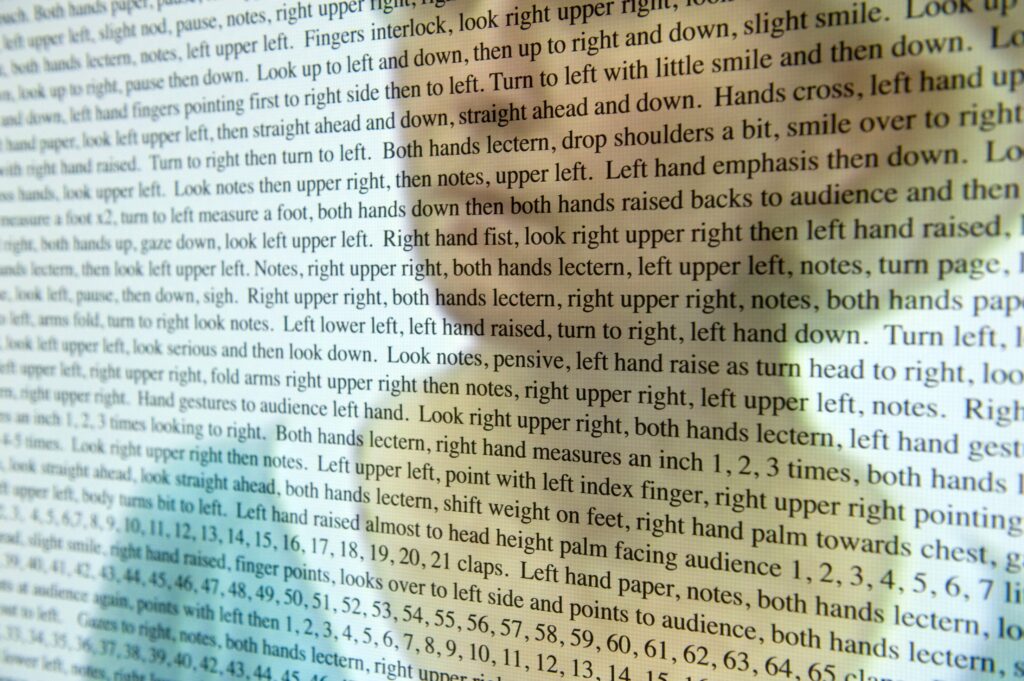
The films of the re-enacted hand gestures were back projected onto paper screens which had been printed with detailed descriptions of the hand movements that occurred during that person’s speech. No details of the spoken content of the speeches were displayed.
Five Speeches was selected by Katharine Welsh assistant curator at The Baltic, for AXIS MAstars.
Katharine Welsh selects Kate Stobbart from Newcastle University for MAstars
Kate Stobbart works in sculpture, performance and video. For her MFA exhibition at Newcastle University in August 2011, she presented the five-channel video installation ‘Five Speeches’ (2011) in which five paper screens were hung from the ceiling in an arc. Back-projected onto the screens were videos of actions being performed by Stobbart herself. Written on each screen were central blocks of text giving detailed narrative descriptions of the actions: ‘rolls sleeves’, ‘raises right hand’ and so on.
In ‘Five Speeches’ Stobbart performs the speeches – or more precisely, re-performs the performances – of five public speakers. She appears on each of the five screens dressed in the same way and in everyday clothes, life-size and against a white background. Her performances are near perfect mimesis – imitating the characteristic gestures, movements and expressions of each of her chosen orators in turn.
On the first screen – encountered from the left when entering the work – Stobbart makes very slight, controlled movements (the movements of the journalist Kate Adie as the accompanying text says). On the second screen (performer Lady Gaga), Stobbart acknowledges the crowd, holds the podium and points directly at the audience in a rallying cry. Her air punches charge the performance with energy. On the third screen (politician Roy Hattersley), the artist jabs downwards with her hands – the gesture of a performer well-versed in public speaking. Meanwhile, on the fourth screen (Turner Prize winning artist Mark Leckey), Stobbart performs hands-in-pockets, rolling and unrolling of sleeves, various self-comforting gestures and repetitive nose-wiping in a self-consciously casual style. On the fifth screen, Stobbart performs the head twitch, interlaced fingers, and understated open hand gesture of Barrack Obama: the pace, rhythm and control of a classically trained orator.
Stobbart reproduces every gesture of the orators to reveal the mechanisms of each performance. These re-performances both literally, in terms of display, and metaphorically, project the projections of each subject. The choice of subjects – Adie, Gaga, Hattersley, Leckey and Obama – prompts comparisons that further highlight the performance structure, exaggerate their differences and lend a comic edge. But Stobbart’s performances are not parodies of their originals. They mimic faithfully their models. Gaga’s gestures are wildly dramatic; Adie makes birdlike twitches; Hattersley stabbing gestures; Obama is strikingly controlled, and Leckey (best known for his own lecture performances) plays casual.
‘Five Speeches’ is an amusing, engaging and accomplished work. It is disarmingly direct yet precisely constructed. Like the artist Andrea Fraser, Stobbart inhabits the role she critiques to reveal symbolic systems, social relations and structures. The ‘lecture performance’ has been employed often by artists from Chris Burden, Yvonne Rainer, Robert Morris, Robert Smithson and Joseph Beuys to question art discourse.
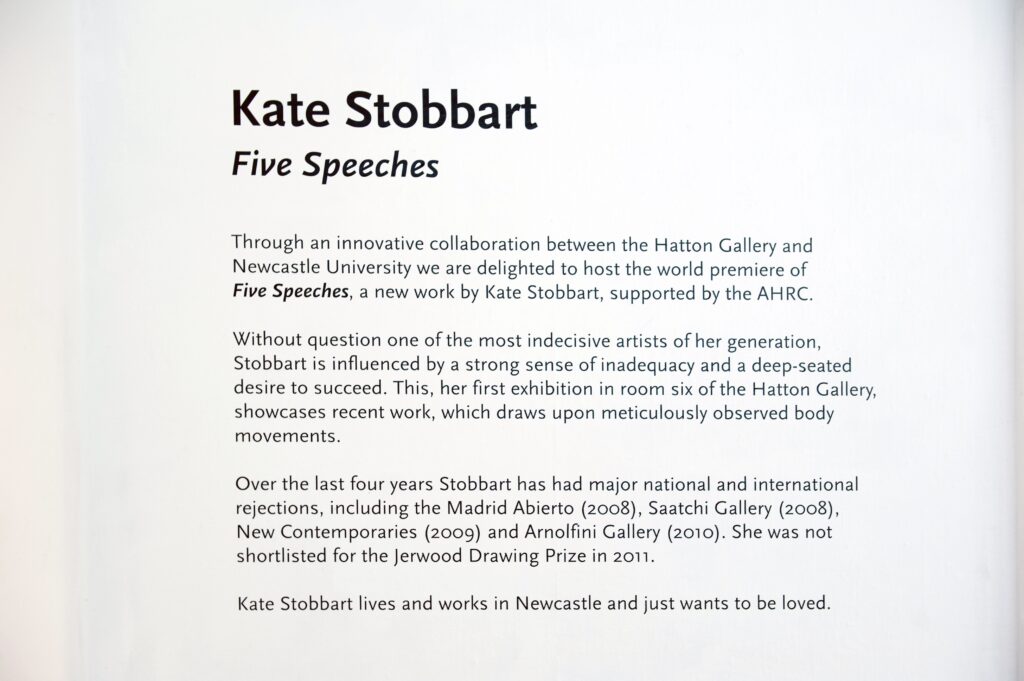
Similarly, Stobbart uses the context of her presentation as part of the MFA degree show to dissect the lecture format that is central to the art education system. But Stobbart then adds another layer. The text work ‘OMG’ (2011) that accompanies ‘Five Speeches’ is placed in the space like an interpretative text panel. Stobbart has appropriated the text from artists’ statements, edited them together and rendered them meaningless to cut through the bombast of the typical artist statement. In the additional text that accompanies, Stobbart describes each exhibition rejection she has ever received and delivers a further, fatal, comic blow to the assumed power and authority of the artist – which can only leave us thinking.
Selected by Katharine Welsh
Published November 2011